
Land Use Framework for England
Supportive of shooting with a throw-away line about 'licencing'...

Last week, the government published what it describes as a framework for how England can use its land more effectively. In the Foreword to Land Use Framework for England (available as a 58-page downloadable PDF), Emma Reynolds MP, Secretary of State for Environment, Food & Rural Affairs, writes:
“Land is our greatest natural asset and the foundation of our lives. The landscapes of England are the product of centuries of changing use, the source of our food, home to the ecosystems that sustain life, and the foundation of a growing economy. How we decide to use that land in the decades ahead will shape everything: the homes our children live in, the energy that powers our economy, the nature we pass on to future generations.”
The ‘nature we pass on to future generations’ is one of those dread phrases that suggests nature (ie biodiversity and the life that is forced to share this planet with the most selfish and rapacious animal in history), is somehow passive. Essentially, the government is saying, what shape ‘nature’ survives in - in fact whether ‘nature’ survives at all - depends entirely on landowners.
And who might those landowners be?
It will be the very people who have been at the centre of that ‘changing use’. “No one”, according to Emma Reynolds, “understands the connection between land and resilience better than the farmers who work it.”
Would that be the same farmers who understand the connections between land and wildlife so well that data from the British Trust for Ornithology (BTO) shows the number of birds breeding on farmland has fallen by 62% between 1970 and 2024 (and by 11% in just the last five years)?
The same farmers who have insisted on an ineffective badger cull to protect the dairy industry?
The same farmers whose use of pesticides is a key factor in the decline of pollinators, with strong evidence linking certain chemicals to the harm of bees and other vital insects?
The same farmers who complain about ‘net zero’ projects but who sold so much land to developers that almost 300,000 homes were built on more than 8,000 hectares of prime farmland (despite, according to CPRE, there being space for 1.3 million homes to be built on more than 26,000 hectares of previously developed brownfield land, much of it disused and derelict urban patches of the midlands and north most in need of regeneration).
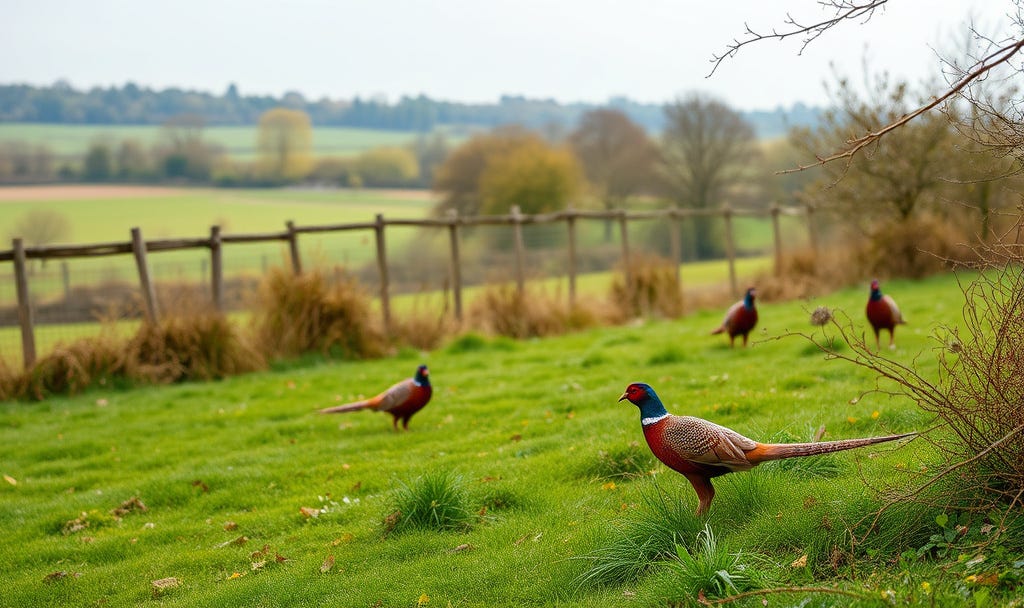
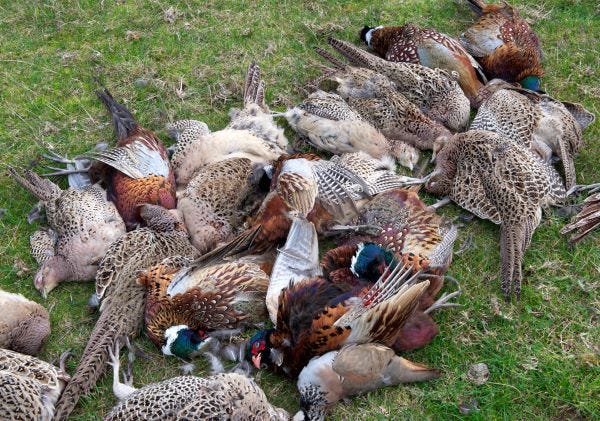
The same farmers that have helped to so normalise ‘shooting’ that around 60 MILLION non-native pheasants and Red-legged Partridges are now reared and released into the countryside every year just for hobbyists to kill?
Indeed, it would.
We’re not suggesting, incidentally, that all farmers are somehow ‘anti-nature’. Government economic policy created the drive for production and diversification. Many farmers are desperate to bring wildlife back to their land, but there is a reason it has become a cliché in situations like this to wheel out the phrase that defines madness as “Doing the same thing over and over again and expecting different results”…

The government supports ‘gamebird shooting’.
Our remit on End Bird Shooting is, of course analysing the shooting industry. Despite what some online commentators have suggested, there is very little on shooting in the Land Use Framework for England, bar what appears to be a locked-in view that shooting is ‘a good thing’ (we will look at licencing further on in this post).
The government states that,
“A large area of land in England is managed primarily for recreation. Shooting estates and other recreational land, such as golf courses and equine land, can play an important role in local economies, and we recognise that some of this land makes a strong contribution to supporting wildlife and tackling climate change.”
and
“Land managed for gamebird shooting covers a substantial area of England. For example, estimates suggest that land managed for grouse shoots covers around 3.3% of England (Source: Game and Wildlife Conservation Trust [GWCT]). We recognise the value of well-managed recreational shoots as part of countryside economies and culture, but know that recreational gamebird shooting can have trade-offs with environmental, economic, and animal health and welfare outcomes.”
Individual grouse moors are huge (hence the 3.3% land use figure), but while pheasant and partridge shoots are smaller (though increasingly being positioned on less optimal areas of grouse moors), there are far more of them.
There is no legal requirement to register a shoot, so no one knows exactly how many there are, but they have mushroomed in the last few decades. The GWCT, who are shooting lobbyists, say “through extrapolation we estimate that about 25 million pheasants (Sage et al., 2005) and over 6 million red-legged partridges are released onto perhaps 3 million hectares of land.”
3 million hectares. It’s difficult to envision just how much that is, but by way of comparison, Greater London covers approximately 157,200 hectares, according to data from the Local Government Association. In 2025, the government stated that “The utilised agricultural area (UAA) remained at 16.8 million hectares in 2025 and accounts for 69% of the total area of the UK.”
The legal killing of birds is being carried out across a massive area of the available countryside, then. Along with the pain and suffering that shooting causes goes an enormous amount of trapping and killing of native predators. The ‘strong contribution to supporting wildlife’ seems to be entirely incidental. Land ‘protected’ for pheasants and Red Grouse has some knock-on benefits to eg other birds that share the same habitat (there are at least birds on land used for shooting compared with new housing estates), but we would certainly dispute that wildlife - including foxes, mustelids, and corvids - benefit from the land being used for shooting.
Neither can anyone seriously suggest that a key indicator of ecosystem health, birds of prey, benefit from land being used for shooting.
It’s only a few weeks ago that research published by the RSPB showed that Hen Harriers are ten times more likely to die or disappear when on grouse moors, and that the average life span of a Hen Harrier in the UK post-fledging is now only four months due to the impact of persecution by gamekeepers on shooting estates.
And again it’s only a few weeks ago that Russell Mason, a gamekeeper on a Perthshire shooting estate was found guilty of battering a (Northern) Goshawk to death in yet another case demonstrating the routine nature of wildlife crime inside the shooting industry. Mason’s case had such obvious parallels with the conviction of Thomas Munday (a gamekeeper convicted of battering a Buzzard he’d caught in a crow trap in January this year) that even the shooting industry’s most ardent supporter would have to admit that there is a pattern here.
Licencing? Possibly…
Despite everything above, for reasons presumably only explained by landowner influence and a lack of understanding on the part of the government, the Land Use Framework for England (without any accompanying explanation) suggests that shooting does have environmental and animal welfare benefits:
“In order to future-proof the sector and ensure high environmental and animal health and welfare outcomes, we want to transition to the highest standards of practice being consistently applied for upland and lowland shooting.”
Which is where the vague and non-detailed suggestion that ‘licencing’ might be brought in is suddenly dropped in.
Defra says it wants to:
“Work with the sector and other stakeholder groups to explore wider measures such as licensing and any associated conditions for recreational gamebird shooting and release, going beyond current approaches which only apply on or near European protected sites. This will begin with evidence gathering and any proposed changes will be subject to public consultation.”
The ‘sector’ in this case would appear (as it is the only one referred to in the document) to be landowners and farmers - the very people who have allowed the issues with shooting to get so out of hand. ‘Other stakeholder groups’ could mean eg the RSPB or Protect the Wild, but it will (going by just how embedded lobby groups are) certainly mean BASC, the Countryside Alliance, and other lobbyists for what the government blandly calls ‘recreational shooting’.
‘Explore wider measures such as…’ is of course nothing like an implicit promise to introduce licencing. Licencing may be looked at in the future, but then again it may not.
One other factor worth remembering is that ‘evidence gathering’ can typically take several months to over a year. Any public consultation would take several months more. There is no start date laid out in the PDF, the government simply saying that “We have set out our first steps but will continue to engage with farmers, developers and other citizens as we implement this Framework.”
Perhaps the real kicker comes right at the end of the PDF:
“We have set out our first steps but will continue to engage with farmers, developers and other citizens as we implement this Framework. We will also ensure our future work, such as the Farming Roadmap, addresses the most pressing issues and helps achieve our vision. This approach, centred on transparency and partnership, will help inform the next Land Use Framework, published in five years’ time [our emphasis].”
The next general election can be held on 15 August 2029 at the latest. If the government are serious about tackling the horrors caused by ‘recreational shooting’, it needs to get a move on - and even then they will need to get into power again just to move things forward…
What will licencing solve anyway?
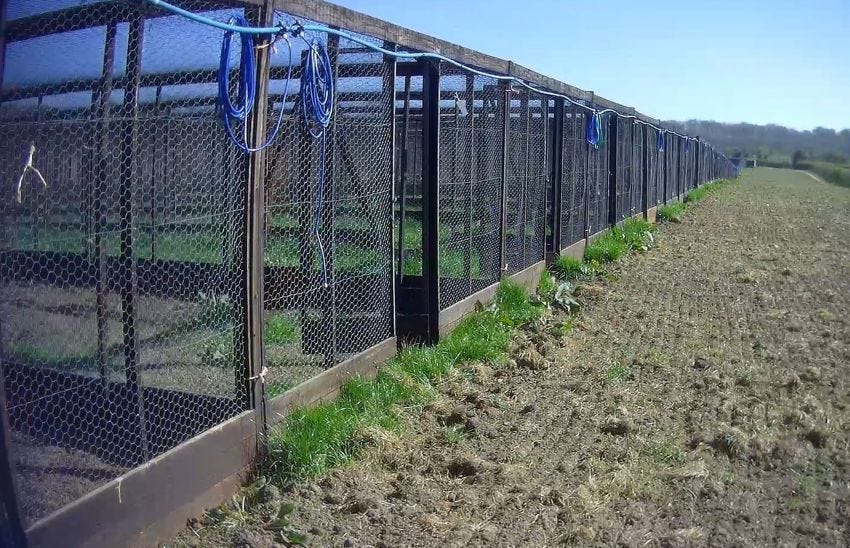
While owning and using firearms is (rightly) highly regulated in England, remarkably, any landowner can set up a shoot and sell ‘recreational shooting’. Infrastructure like release pens, tracks, or parking may require planning permission, and noise from shooting must not constitute a statutory nuisance to neighbours (a ‘regulation’ which our email inbox demonstrates is widely ignored by shoot operators), but otherwise - assuming someone else doesn’t own the shooting rights to the land - it is not difficult.
The shooting industry whines that it is highly regulated but a landowner doesn’t even need a licence (i.e., legal permission) to set up a shoot and use a General Licence to trap Magpies or kill foxes.
So would a licence ‘fix’ the problems that shooting causes?
We don’t think so and have explained why several times, but will do so again:
Licencing officially condones the slaughter of millions of pheasants, partridges, grouse, ducks and geese every year. That is not acceptable to us.
Licencing essentially says that the ‘legal’ killing of countless numbers of foxes, corvids, stoats/weasels, and other native animals in traps to support the shooting industry can continue as of now. That is also unacceptable to us.
We are led to believe that licencing will act as a deterrent and protect birds of prey. That’s despite legislation which already exists to protect birds of prey ‘and has done so for well over half a century.
Raptors are killed on shoots as a matter of routine because it is so difficult to catch the criminals in the act. Estates are huge, often isolated, and largely private. Estates shield criminals (no estate has ever handed one of its gamekeepers over to the police). There is no suggestion in existing discussions around licencing legislation to increase resources for investigators or enforcing authorities, or adding new powers for police to investigate crimes.
New legislation in Scotland brought in to supposedly tackle raptor persecution has become a mess already (see Grouse Moor Licencing: the legal mess we always thought it would be). Shooting groups put so much pressure on NatureScot that they decided to hugely reduce the area of land affected by a new licensing regime after legal threats. Estate owners don’t want legislation and are doing everything they can to limit its reach. Given Defra’s support for ‘recreational shooting’, why would anyone think that wouldn’t happen in England?
Landowners can afford defence lawyers that will gleefully exploit exemptions in laws that are either poorly written or deliberately hobbled by Parliament itself (like the Hunting Act 2004). They will threaten legal action, deny responsibility, and tie up the courts for years. In the meantime, birds and mammals will continue to die.
Is it all bad?
Any conversation about the future of land use is better than none at all. But it is not encouraging to see Labour’s pro-shooting attitude first laid out in 2023 by Steve Reed when he was Shadow Secretary of State repeated here.
Reed spoke at a joint BASC and Angling Trust rural reception at the party’s autumn conference in Liverpool, declaring that “That respectful approach is absolutely necessary if we’re going to form a government and then be a successful government. And that includes us supporting shooting that is sustainable and conducted according to the law.”
Laws can be changed by the government (that’s what MPs do, after all and only last week it suggested it would look at removing some highly threatened species from the ‘quarry list’), but leaving that aside, it’s hard to argue that killing animals is sustainable for anyone other than the industry that carries it out. The millions and millions of birds blown out of the sky would - if they could speak - definitely tell the government that the shooting it supports is not sustainable in any way at all.
However, even floating some sort of control over the exploitative and destructive shooting industry is a step in the right direction.
It comes at the same time as a public consultation on so-called ‘trail hunting’, a manifesto promise made because it has become clear to everyone that hunting is a ‘smokescreen’ for ‘traditional hunting’ and that the law is being broken hundreds of times a ‘season’.
Lobbyists are fiercely organising to flood the ‘trail hunting’ consultation with pro-hunt and supportive comments. Shooting will undoubtedly do the same. Tim Bonner, the ‘gift that keeps on giving’ CEO of the Countryside Alliance, was quoted in The Times on the day the PDF was published saying the very idea of licencing was “a declaration of war on game shooting“.
What a ridiculous statement. It really is not. It reads far more like a guarded recognition that the shooting industry is breaking the law and that regulation - of even a limited sort - is well overdue. Nothing in the PDF remotely threatens shooting. As we have pointed out above, the government (for its sins) overtly supports shooting.
But Bonner’s knee-jerk reaction is typical of how shooting will respond: toys out of the pram, attempting to create ‘communities’ where in fact opinion is not homogenous, and typically ignoring all the harm that ‘recreational shooting’ does to wildlife and the countryside.
So is it all bad? Of course not. We don't see the Land Use Framework for England as a serious shot across the bows, but it is positive that questions about this selfish and entitled industry are being raised.
It is a crack that we can - and will - drive a wedge into.
So we will continue to shine a spotlight on this vile industry;
We will continue to work for a change in public attitude;
And we will continue to work for an end to bird shooting.
Because the lives of millions and millions of animals depends on us doing so.
I am disappointed to see that this Labour government is as hostile to nature and wildlife as the previous Tory government.
I have never voted Tory, now I won't vote Labour (unless they drastically change direction) No shooting can be legitimately described as 'sustainable', that is utter nonsense, it is just caving in to lobbyists who enjoy killing defenceless animals with firearms
A Government that supports Genocide and illegal wars, is not likely to be concerned by psychopaths delighting in shooting living targets.