

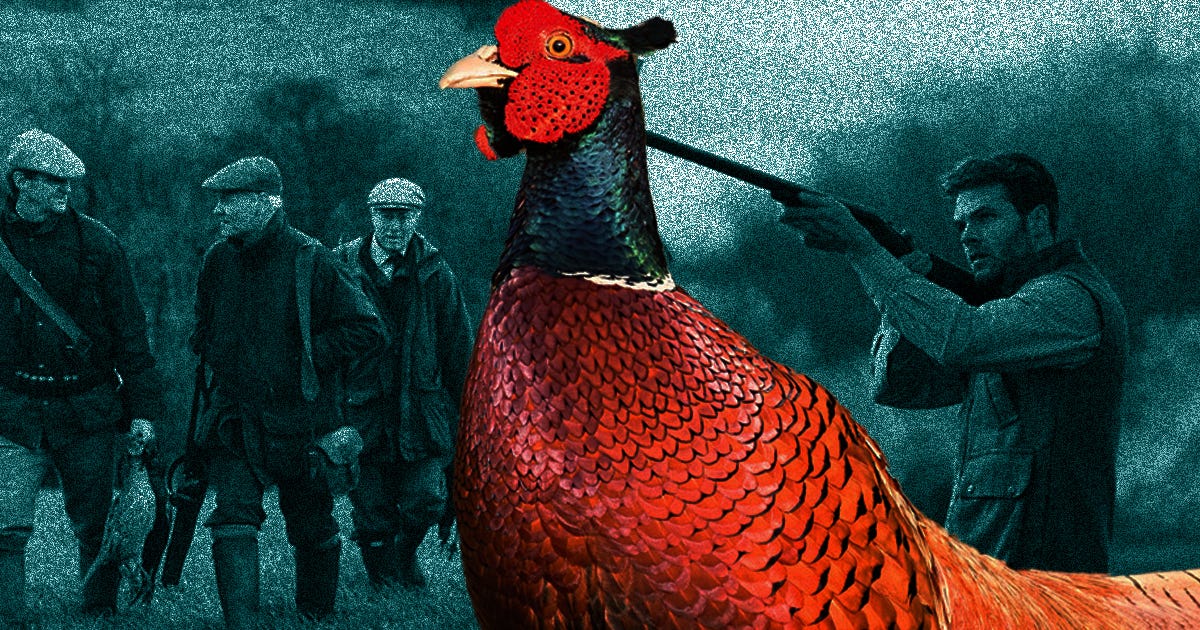
Triggering an absolute meltdown by gun industry lobbyists, the UK Government recently confirmed it intends to publish a public consultation in January next year on aligning the licensing controls for shotguns (Section 2) with those for other firearms (Section 1) under the Firearms Act 1968. The official view - which seems entirely reasonable to us - is that shotguns are no less lethal than other firearms (like rifles and handguns) covered by Section 1 and that the differences in control (ie licencing/certification) could be reconsidered to address misuse risks.
The government plans have stemmed from recommendations made by the Scottish Affairs Committee and a Prevention of Future Deaths report following tragic incidents involving legally owned shotguns.
Under current law, shotguns (and shotgun owners) are treated very differently from other firearms and firearms owners. The reason? Call us cynical. but shotguns are used in so-called ‘countryside sports’ and for decades and decades shooters have either been in Parliament as MPs or have been open to persuasion by lobby groups like BASC, who like to stress their so-called ‘legitimate uses in rural activities like vermin control and sports shooting’.
This pressure has led to a separate, less stringent certification process compared with rifles and other firearms. An applicant for a shotgun licence does not have to demonstrate a “good reason” for owning a shotgun in the way required for other firearms licences. The onus is effectively on the police to show why they should refuse rather than on the applicant to prove why they should be granted one. And unlike permissions to own or use other firearms, once a shotgun certificate is granted it allows possession of any number of qualifying shotguns,as long as they can be stored safely.
Changes
To its credit, the government has been making changes to a licencing system that has historically made it far more easy to buy, own, and use a gun than it should be. Until the Firearms Act 1968, there was no requirement for checks and a certificate to buy a shotgun in the UK at all (the Act established a less stringent, shotgun certificate system than that for other firearms though).
The Act has been amended multiple times since it was first passed, notably after the Hungerford and Dunblane massacres which introduced stricter controls, mandatory secure storage, and the requirement to register shotguns. A more recent change (the Firearms (Amendment) Rules 2025) came into effect on August 5, 2025: it introduced a requirement for two referees for all shotgun certificate applications (aligning them with the requirements for firearm certificates) and required the declaration of all convictions
These changes typically result from public consultations. The 2025 amendments came off the back of a consultation in 2023 (Firearms licensing: a consultation on recommendations for changes made to the Home Office) which ran from 29 June to 23 August. The consultation itself followed a mass shooting in Plymouth in 2021, which saw the killing of five people (and wounding of two others) in just eight minutes by Jake Davison, a 22-year-old steroid abuser; Devon and Cornwall Police had given Davison his shotgun certificate back weeks before the shootings.
Clearly, the public response to the consultation was sufficient for the government to change the law. Notably the change (like the new proposals) just took a step towards aligning shotgun ownership with other firearms. It wasn’t a ban in any sense. The response from BASC (in August this year) was interesting though. The lobby group called the changes “tinkering around the edges with firearms licensing without enhancing public safety”, stating that efforts would be better spent “persuading doctors to add a marker to the medical records of any patient that is a certificate holder”.
As far as we can find out, GPs do add a marker to the files of patients who have a shotgun certificate. The process already means applicants must provide a medical information form completed by their GP (or another registered doctor) prior to being authorised by the police, and once the police grant a certificate, they go back to the GP who then places a specific clinical code or "digital marker" on the patient's medical record. This is therefore retrospective (the ‘mark’ is added after the police have already approved the certificate) which seems to us to be the wrong way around. We’re not entirely sure what BASC is suggesting, but if it wants something stronger, we would (and this is a rarity and unlikely to happen again) agree with them: any measure that adds more rigorous checks on who can walk around with a shotgun makes sense to us…

Toys. Prams. Thrown out of.
The reaction to the latest consultations has been bordering on the apocalyptic.
Stephen Jolly, Chief Executive of something called the Gun Trade Association, wrote in November that “This change, if implemented, would represent one of the most significant and damaging shifts to the trade, to shooting and countryside industries in decades…Under the proposal, anyone wishing to own or use a shotgun — whether for work, sport, or recreation — would be required to go through the same application process as a rifle owner.” (!)
BASC, with similarly quivering lip, wrote that “While the Home Office has not revealed the questions they will be asking, merging the two sections could mean that shotguns and rifles are treated in the same way for firearms licensing.” The organisation breathlessly warns that under new rules there may be “no ability to transfer shotguns to another person’s certificate in the event of your certificate lapsing, or your suitability to own a shotgun being reviewed by the police” and there may be rules “restricting the amount of shotgun cartridges that can be purchased and held, with compulsory security requirements – such as storing all cartridges in a locked cabinet.”
Not to be left behind, the lobby group Countryside Alliance sobbed that “The financial and logistical burden on gun owners and traders…would cause significant damage to the rural economy, conservation efforts and communities across the country and especially in the more remote parts of Britain.”
George Freeman MP, the Conservative member for Mid Norfolk (not one of the more remote parts of Britain, surely?), sounded the alarm. Writing on his website he said that “Having grown up on a local family farm - beating and shooting on our family shoot - and as a long-standing BASC member and strong supporter of country sports, I am fully aligned with BASC in opposing any proposal to merge the shotgun and firearms licensing systems…Gun shop owners could face a significant and damaging reduction in trade, and commercial shooting estates - highly valued for jobs, conservation, and local income - could suffer from reduced participation and fewer new entrants to the sport.”
Freeman’s colleague Alicia Kearns MP, the combative Conservative member for Rutland and Stamford, wrote on Facebook that “Shooting is part of our rural way of life…Yet another ill-thought out policy that does not consider the practicalities of our rural way of life.”
What is the consultation ACTUALLY looking at?
Let’s think about this for a moment. The government is simply offering the public a say on whether - shock, horror - a person who wants to go out and shoot would have to go through the same checks and processes as someone else who wants to - er, shoot…
For the vast majority of us who live in the countryside but do not own a gun, have no interest in going out and killing anything, and just want wildlife to be left in peace, the over-the-top reactions from gun owners make no sense at all.
Despite previous amendments being publicly supported and being passed with little cooling effect on gun ownership here, we are being inundated with hysterical claims of the end of the rural way of life. Imagine for a moment if it were the other way around - if campaigners were warning that a consultation on the loosening of regulations might lead to more killings: the gun lobbyists (inside and outside of Parliament) would be crying ‘fake news’ until they were blue in the face.
We are, thankfully, still a long way from the ridiculous situation of assuming an apparently god-given right for citizens to own a gun, but there does seem to be a testing of the water here. The dire predictions are not far from a clarion call to protect ‘freedoms’ and warnings that the ‘lefties are coming for your guns’. It’s nonsense, but the way ‘debate’ is headed.
Let’s be upfront: owning a tool that kills should be a privilege, not a right. Safely storing guns and the ammunition they fire should be routine. Shooters shouldn’t just be able to swop certificates amongst each other.
And asking the public what they think is how democracy works.
Our Undercover Investigation: perhaps the largest and most widespread investigation into the breeding and rearing of birds for shooting ever documented.
We’ve been posting less frequently recently. Not because the ‘fire has dimmed’ in any way but because we have been working through literally hundreds of hours of video recorded on a number of so-called ‘gamebird’ farms earlier this year.
We’ve now compiled over 100 pages of notes, captured more than two hundred screenshots, and have outlined at least thirty ‘stories’ we intend to tell.
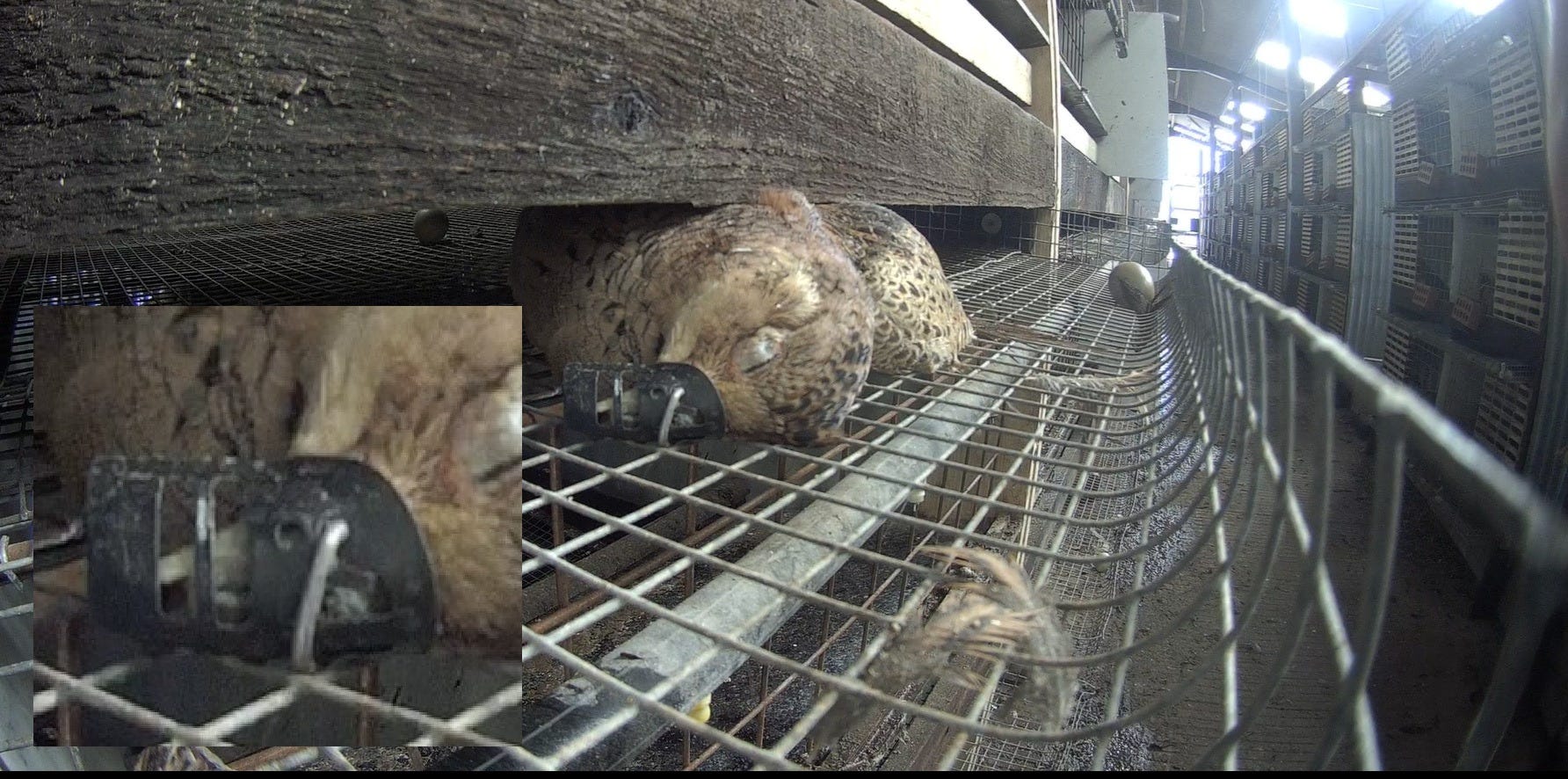
It’s taken us far longer than we thought it would because we have found so much wrongdoing, so many frequent and flagrant welfare breaches, and so many illegalities (everything from unlawful disposal of animal parts and unlawful use of rodenticides).
Pheasant and partridge farms are intensive, industrial-scale factory farms where birds are treated appallingly badly. There is a built-in ‘redundancy’ where owners accept bird deaths as ‘par for the course’, and routine disregard for the industry’s own Codes of Practice.
The shooting industry likes to portray itself as a high-standard, high-skilled producer of wild birds for the gun. We will prove that this is patently untrue.
Coming very soon…
We’re building a movement to end bird shooting and this is just the beginning. Become a paid subscriber to our Substack and help us do more.
"…would cause significant damage to the rural economy, conservation efforts" says the Countryside Alliance, what conservation efforts? Certainly not conservation of birds of prey or wildlife, they mean they won't be able to shoot foxes and badgers that have an impact on ground nesting grouse or pheasants and partridges, maybe the rural population need to concentrate on finding ways to make money that doesn't involve killing things
Why is shooting so important to the rural economy? Because it could not happen in towns. Shooting in towns is dangerous. The creatures to be shot live in the countryside, or have been released into it. It is not important to the economy, it is important to those who enjoy killing.