

Yesterday we told you that the birds driven into the sky this autumn during partridge shooting ‘season’ are not the wild coveys the shooting industry likes to advertise in its brochures.
The non-native Red-legged Partridge and the increasingly rare, Red-listed Grey Partridge, are in fact factory-farmed, bred by the million in commercial units, and trucked out to release pens solely so they can be shot for entertainment.
In this follow-up article we’re showing you exactly what that factory farming looks like, using footage taken by an undercover investigator who filmed on a ‘game farm’ rearing both species.
As we have stated many times, what was documented was in no way an aberration. This is the ordinary, everyday infrastructure of an intensive industry that produces tens of millions of birds a year for the gun - and it is grim.
Crowded, filthy, and out of sight
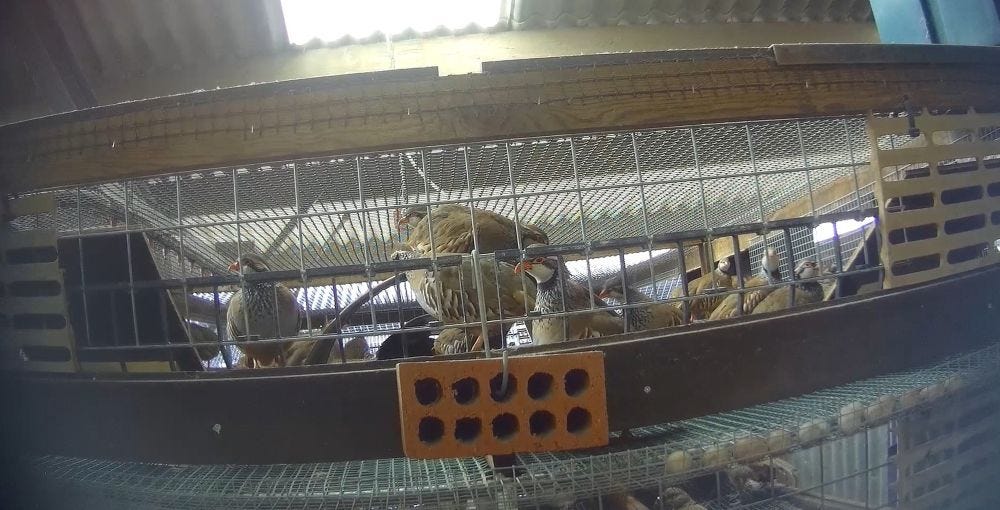
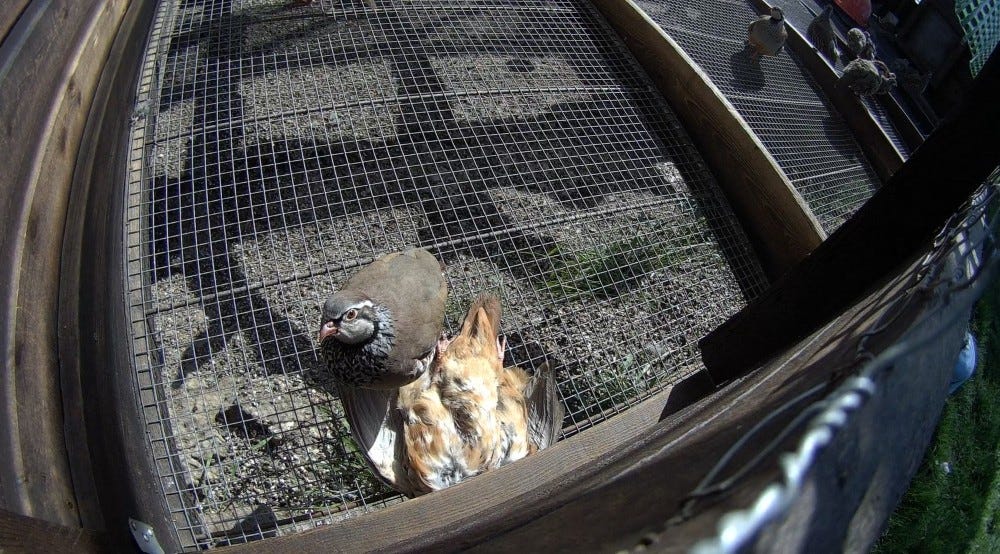
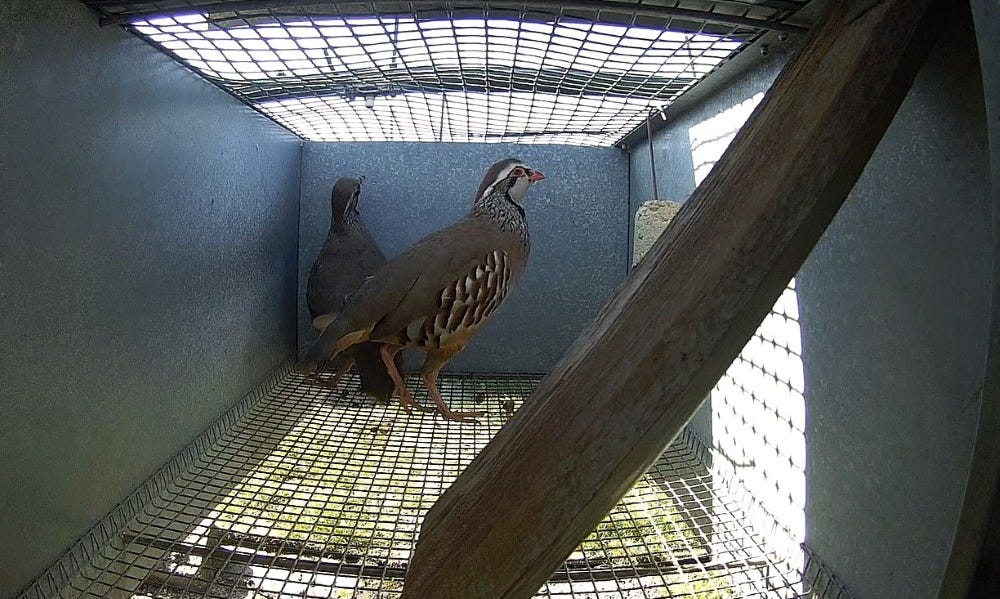
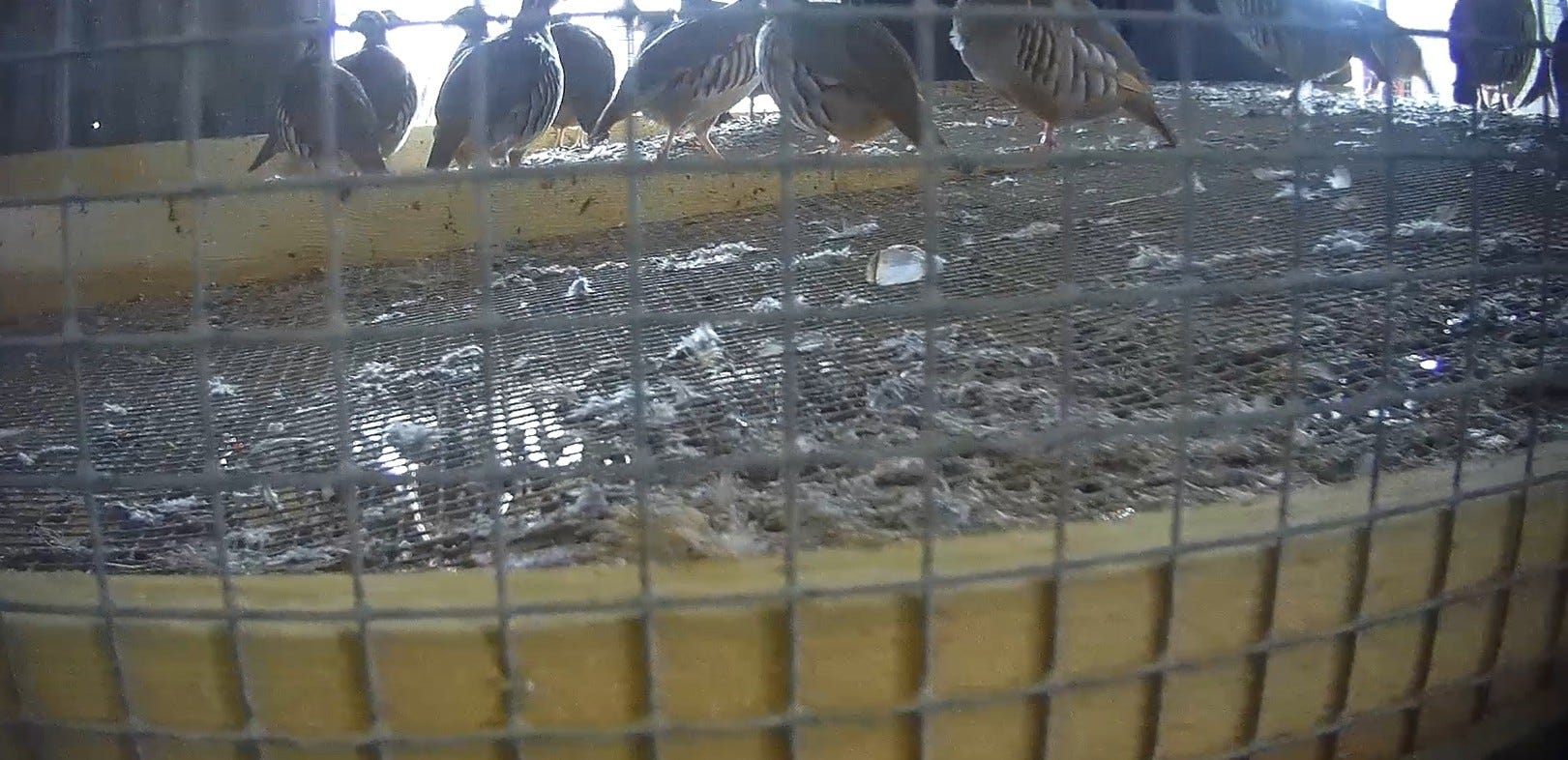
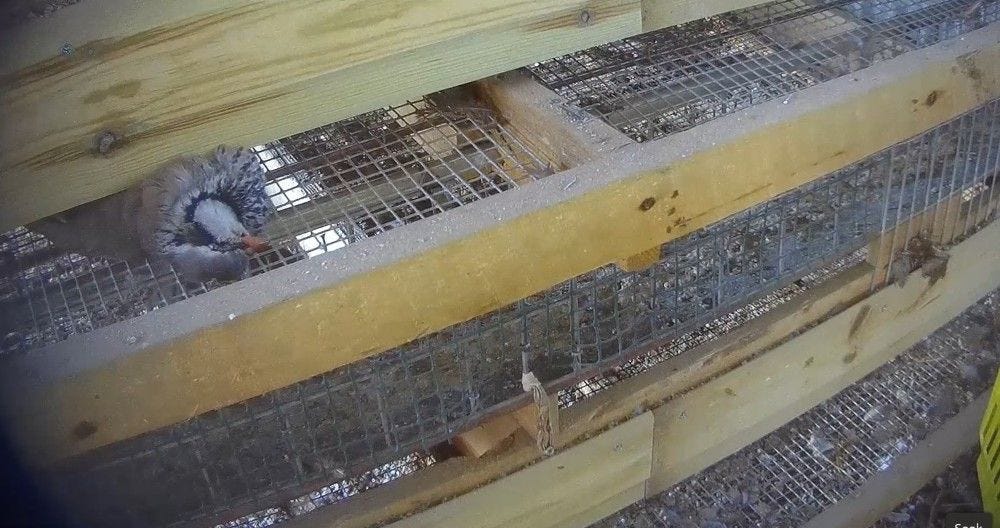
The footage consistently shows sheds packed with birds, and tier upon tier of wire ‘colony’ cages stacked one above another. Dust and matted plumage cling to the cage bars. The mesh floors are thick with droppings, feathers and debris.
Wild partridges walk, forage and dust-bathe their way through hedgerows and stubble all day long, living in tight coveys and rarely flying unless they have to. On ‘game farms’ they are birds with nowhere to go, nothing to do, and no way to express anything resembling natural behaviour.
A senior member of staff overseeing the farm’s breeding Red-legged Partridges told our undercover investigator that some of the birds had been caged like this for up to two years - half the natural lifespan of a wild bird. Hardly surprising if you stop to think about what they are denied.
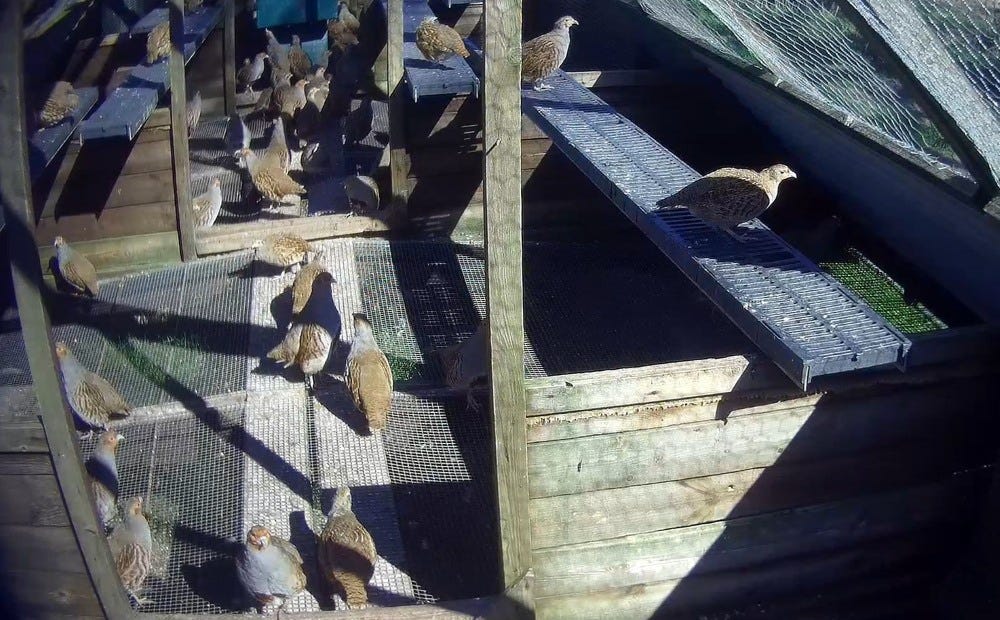
Grey Partridges on the ‘game farm’ suffered in the same way. Think about that the next time you read about partridge ‘conservation projects’ - shooting funds conservation projects for the Grey Partridge with one hand, and breeds and confines them in cramped commercial cages with the other. Either way, the outcome is the same: the birds will be shot dead for ‘sport’.
This would be a strange kind of doublethink for anyone else, but it's nothing unusual for an industry that has been gaslighting the public about its so-called conservation credentials for decades.
A cage beside the cattle
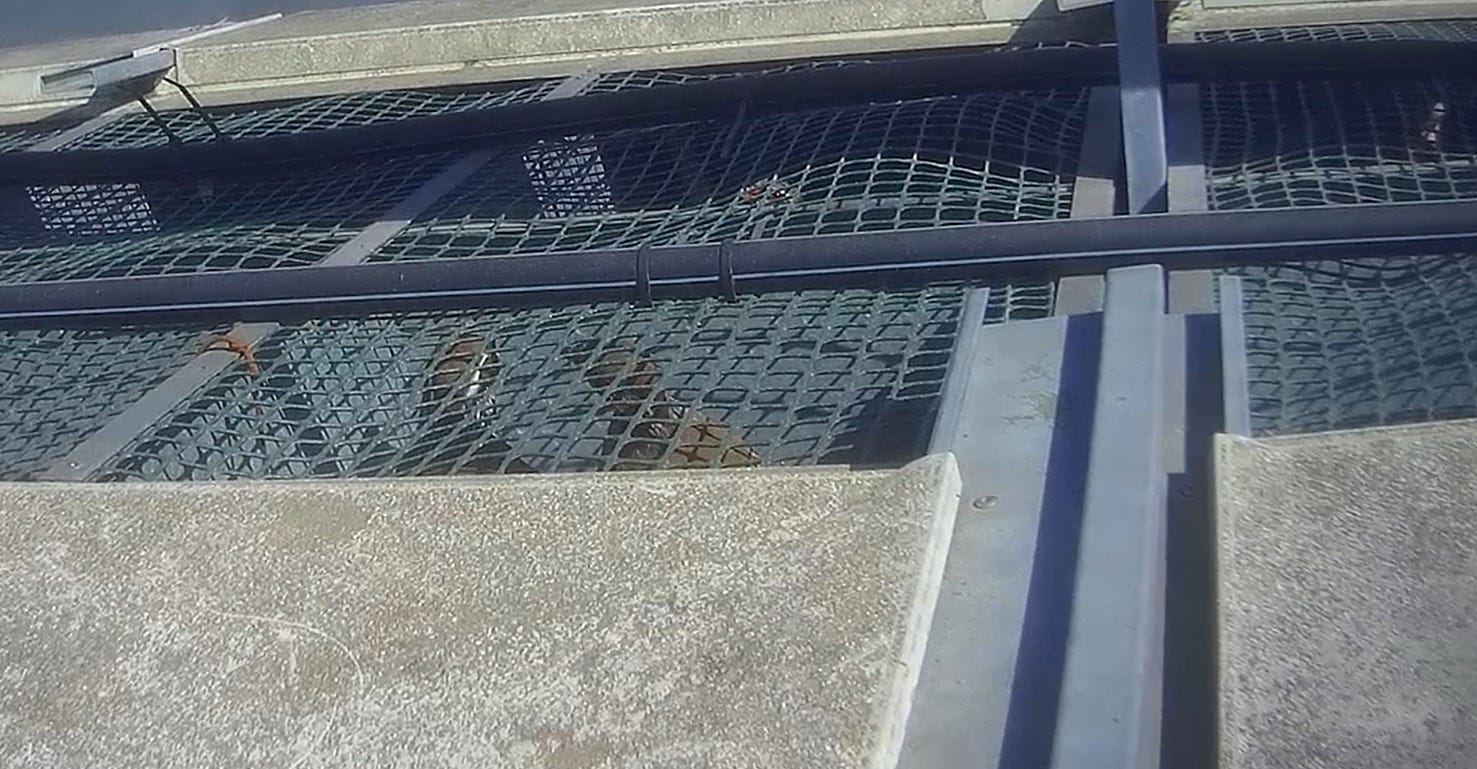
One image from the investigation stands out for a different reason. It shows a large cage of Red-legged Partridges positioned directly alongside a cattle pen. The cage is filthy: caked droppings, soiled bedding and debris visible through the mesh, within feet of grazing cattle.
Basic hygiene and biosecurity practices exist precisely to prevent this kind of set-up. Government guidance is clear that livestock and other animals can carry disease on their feet and fur, and should be kept well away from birds' housing and food.
What was filmed matters. Avian influenza outbreaks in the past have forced restrictions and lockdowns and led to Defra issuing a warning in August 2025 to “Bird keepers…particularly those involved in running a shoot or game bird rearing“ of a “heightened avian influenza risk”.
Whether or not this particular farm has breached any biosecurity regulations is a question for the relevant authorities, but the state of the cage alone would concern any vet: caked droppings and soiled bedding are exactly the kind of contamination guidance says should be removed and cleaned daily.
Partridges are known to be susceptible to Avian influenza. A filthy cage stacked close to livestock is not a small detail. It is a perfect illustration of an industry that talks constantly about its “environmental” and “custodian of the countryside” credentials while, behind locked gates, it is cutting every corner that it can.
The industry’s own standard
A point we have also made repeatedly is that this is not a rogue operator or a farm in special measures.
None of the farms the investigator filmed at for this series of articles is unusual. What we are showing you is what routine partridge (and pheasant) production for the gun looks like at scale, only it is normally hidden from view and from the millions of people who will never set foot on a shoot but who care about how animals are treated.
The shooting industry’s trade bodies talk about welfare codes and responsible practice. Our investigator’s footage shows over and over again what those words amount to: overcrowded cages, filth, and total disregard for the animals bred to be shot at for ‘sport’.
A complicit clientele
There is no version of “responsible” shooting that doesn’t start with birds raised like this, and as we have been saying throughout this series, none of this cruelty and exploitation exists in a vacuum.
Factory farms like these exist because there is a market for what they produce. That market is paying clients - the people who book a day’s shooting, hand over hundreds or thousands of pounds, and stand in a field waiting for birds bred in exactly these conditions to be driven over their heads.
We suspect they never think about the tiered cages, the ammonia, the birds pacing endlessly on wire mesh, or a Red-legged Partridge crammed into a filthy cage beside a cattle pen. But that disconnection is not an excuse. It is a choice, not an accident.
Anyone who pays to shoot a partridge or a pheasant this autumn must know that they are funding this industry to keep running exactly as it is. There is plenty of evidence available, and it is becoming impossible to ignore.
Shooters are part of the system, and they are complicit in it. All this suffering is on them too.
Images recorded by an undercover investigative team in 2025.
We are working to END BIRD SHOOTING. This suffering has to stop. Please share this article. Share our socials. Follow us for updates.
End Bird Shooting
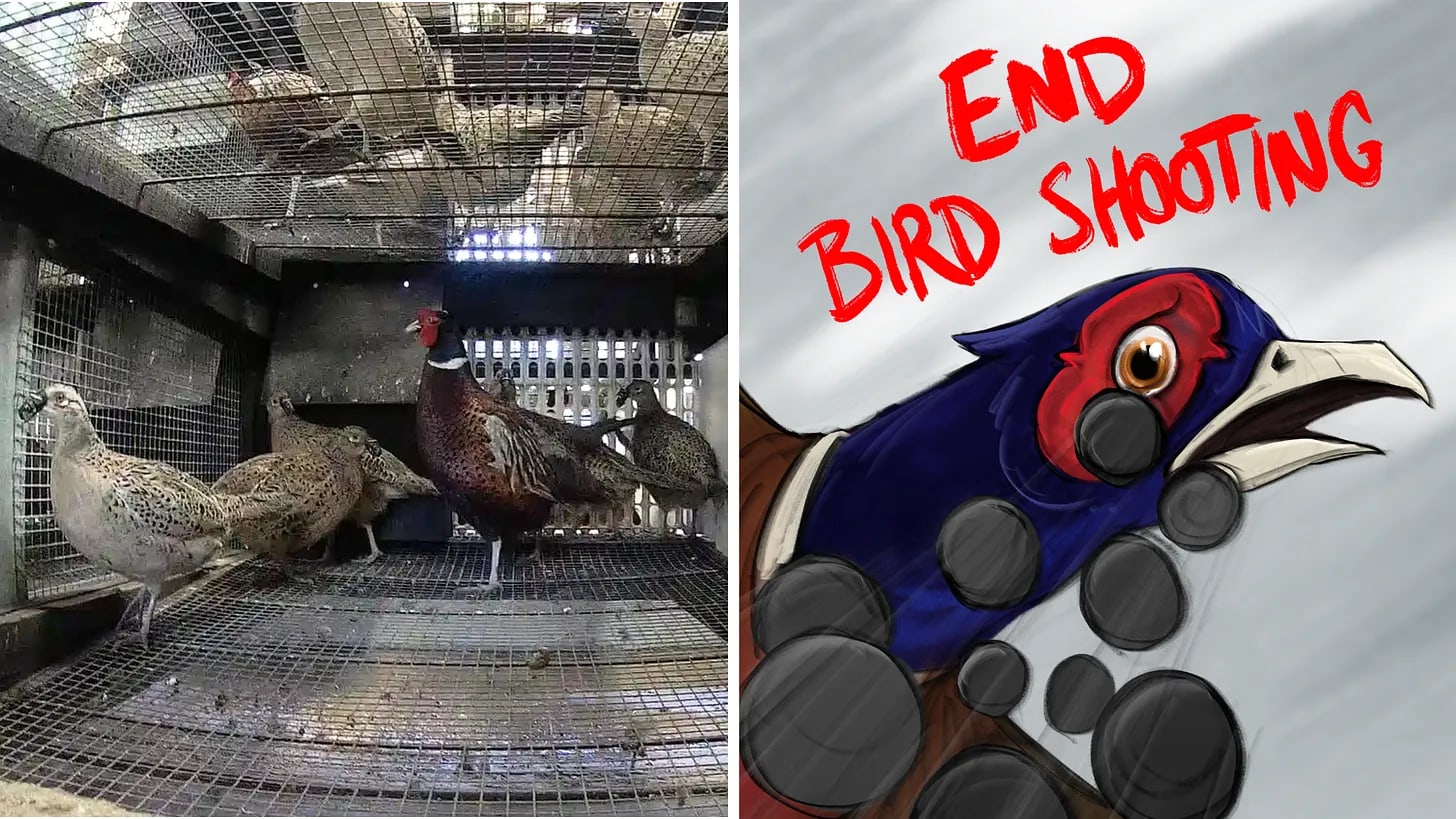
Our campaign will look at the shooting industry at every level. We will highlight the suppliers — the farms, hatcheries, importers and breeders producing tens of millions of birds under conditions that would provoke public outcry if applied to any other animal. We will expose the providers — the estates and syndicates that take those factory-farmed birds and sell the experience of killing them as leisure. And we will look at the clients — the paying guns who are fully aware of the wildlife crime, the trapping of native predators, and the mass suffering involved, and who have decided that none of it is reason enough to stay away.
This industry survives because suppliers supply, providers provide, and clients pay. We intend to examine them all.
If you have information about a farm, shoot or estate you think we should be looking into, please let us know.
Join the movement. Become a Game Changer.
We are at the beginning of something. Months of undercover work. Hundreds of hours of footage. Farms across the UK exposed. But we are only just getting started.
Many of you have already become a Game Changer, standing with us as we take this fight forward, week by week, piece by piece, until the public, the media and the politicians can no longer look away. We are extremely grateful
We are reaching a larger audience all the time, though, many of whom won’t know that Game Changers help us fund investigations, take on staff, and make us more effective. So we are going to repeat the call here - this is just the beginning, please be a part of it.