
Empty Cages, Empty Claims
That is not just an enrichment problem. It is a problem of the system as a whole.

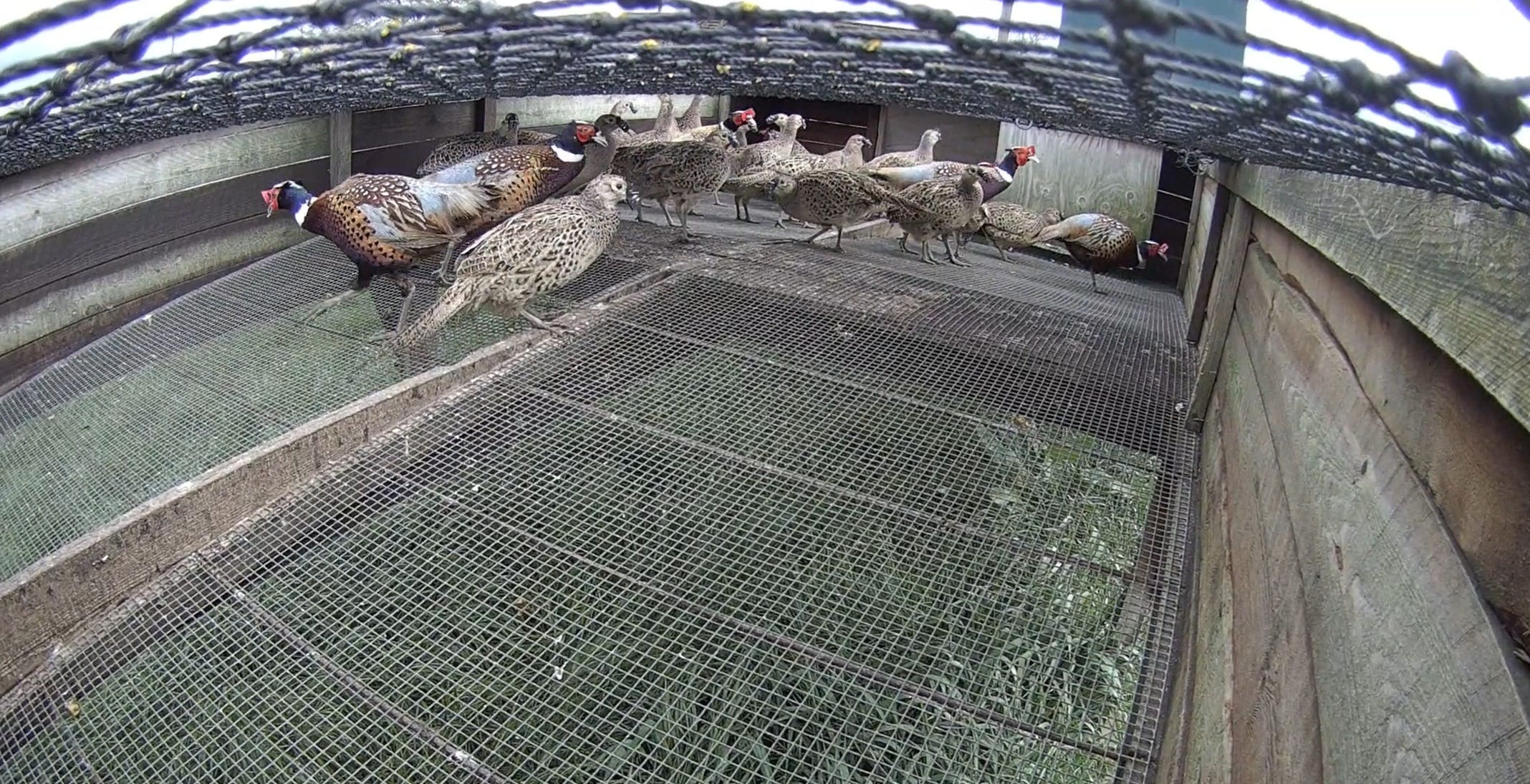
Every year, tens of millions of pheasants and partridges pass through Britain’s so-called ‘gamebird’ breeding farms before being sold on to shoots. The public rarely sees inside those farms. Our investigators did.
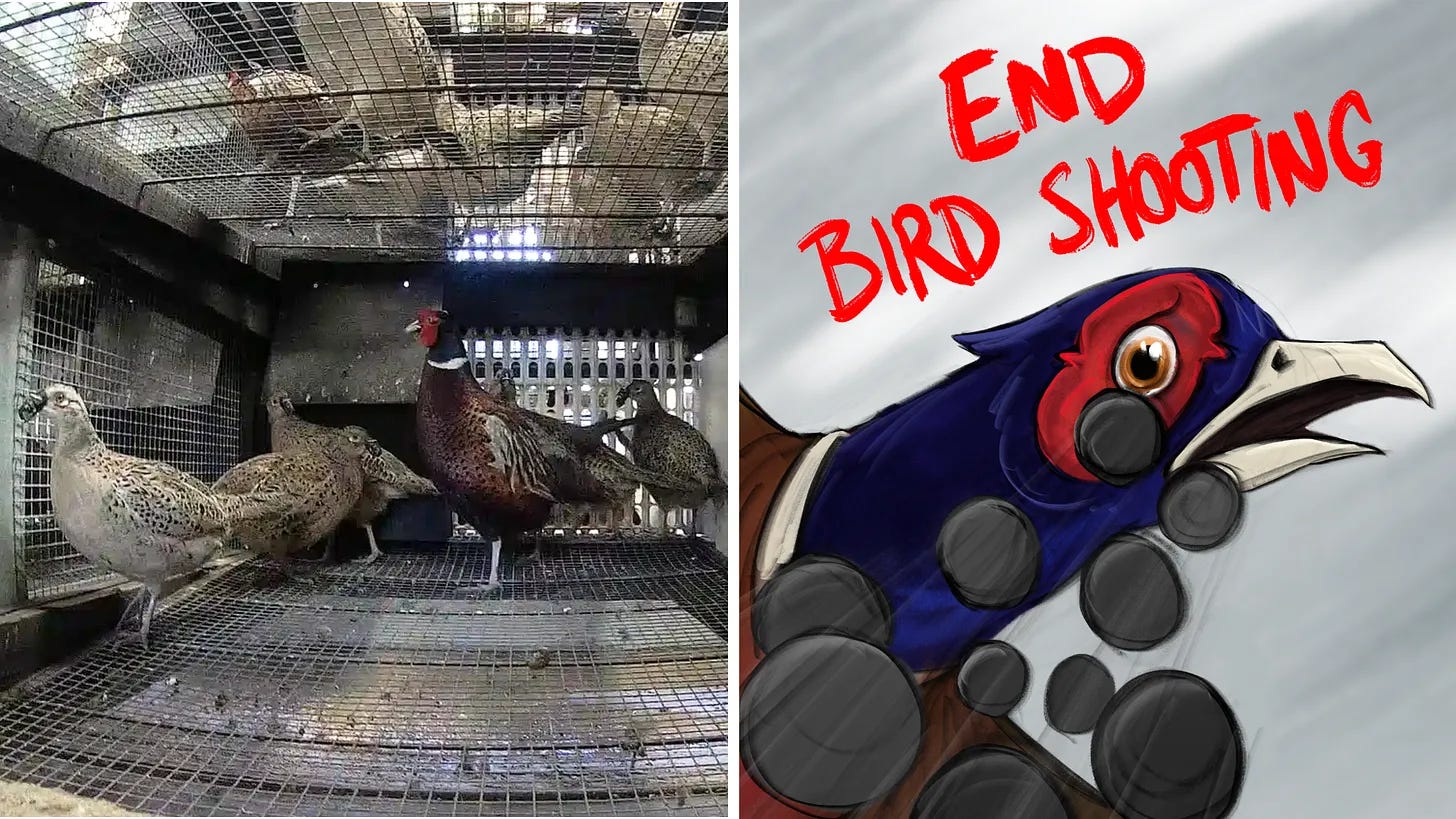
They found many things that were disturbing and upsetting. But in this post we are focusing on the raised laying units - the industry’s preferred terms for raised cages, the rows and rows of wire mesh cages suspended off the ground that we described in an earlier post (see This is the scale of factory farming the shooting industry doesn’t want us to think about).
What they found in these cages was, in the most literal sense, almost nothing. No soil. No leaf litter. No vegetation. Nowhere to dustbathe, to forage, to do any of the things that pheasants and partridges are biologically driven to do from the moment they hatch. Just wire, and birds standing on it.
Enrichment is not an abstract concept. For caged birds, it should mean the difference between a life that allows some expression of natural behaviour and one that allows none. Pheasants are driven to scratch and peck at the ground, to dustbathe in dry earth, to move through vegetation, to explore. Partridges are similarly active, inquisitive birds, adapted to a life spent largely on the ground. In a raised cage, every one of these instincts meets a dead end. There is no outlet. There is only the wire beneath them and the bare space around them.
When our footage was made public, the industry’s response was to deny and push back. Heart of England Farms Ltd, which featured in an ITV News broadcast, released a video specifically claiming its cages did contain enrichment. What it showed was a wooden board and a partridge supposedly pecking at it.
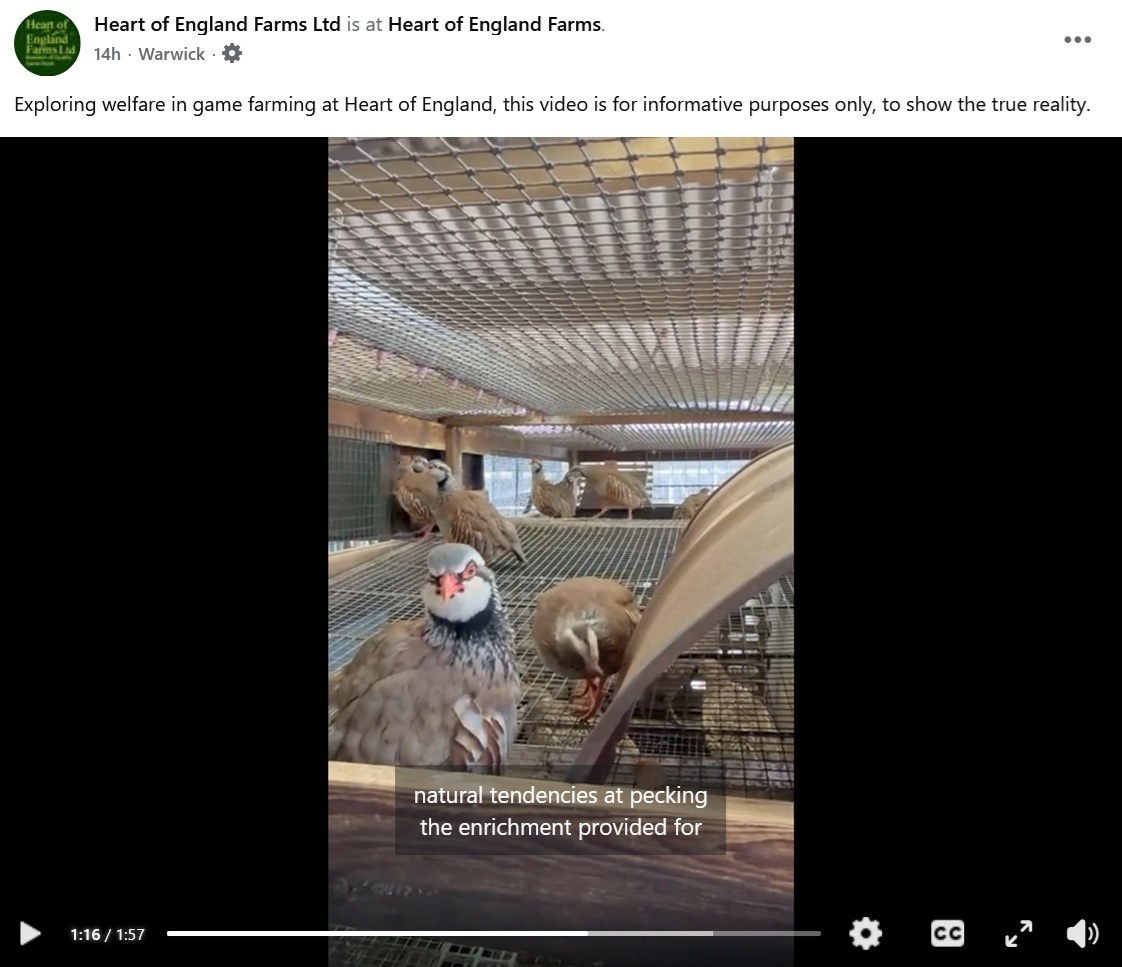
We want to be careful and precise here, because the industry will not be. A board to peck at, a block to stand on, does not allow a pheasant or a partridge to dustbathe or to forage. They are objects placed in a cage. They do not address what is absent. They do not give these birds back the ability to act on their instincts in any meaningful sense.
Token items may satisfy a checkbox somewhere in a voluntary code of practice, but no serious person believes they constitute ‘enrichment’.
This matters because the language, the tokenism, of enrichment is being used to stop a conversation that the industry doesn’t want us to have. If a piece of wood counts as enrichment, then enrichment means nothing. If a shelter counts as enrichment, the bar has been set so low as to be meaningless. The industry is not meeting a standard. It is defining one in its own favour, in cages it profits from, under guidelines it had a central hand in shaping.
And importantly, this is not one farm’s failing. Raised laying units are the industry norm. The conditions our investigators documented - the bare wire, the absence of ground contact, the lack of anything that might allow these birds to behave like the animals they are - are not exceptional. They are standard. They are what the system looks like when it is working as intended.
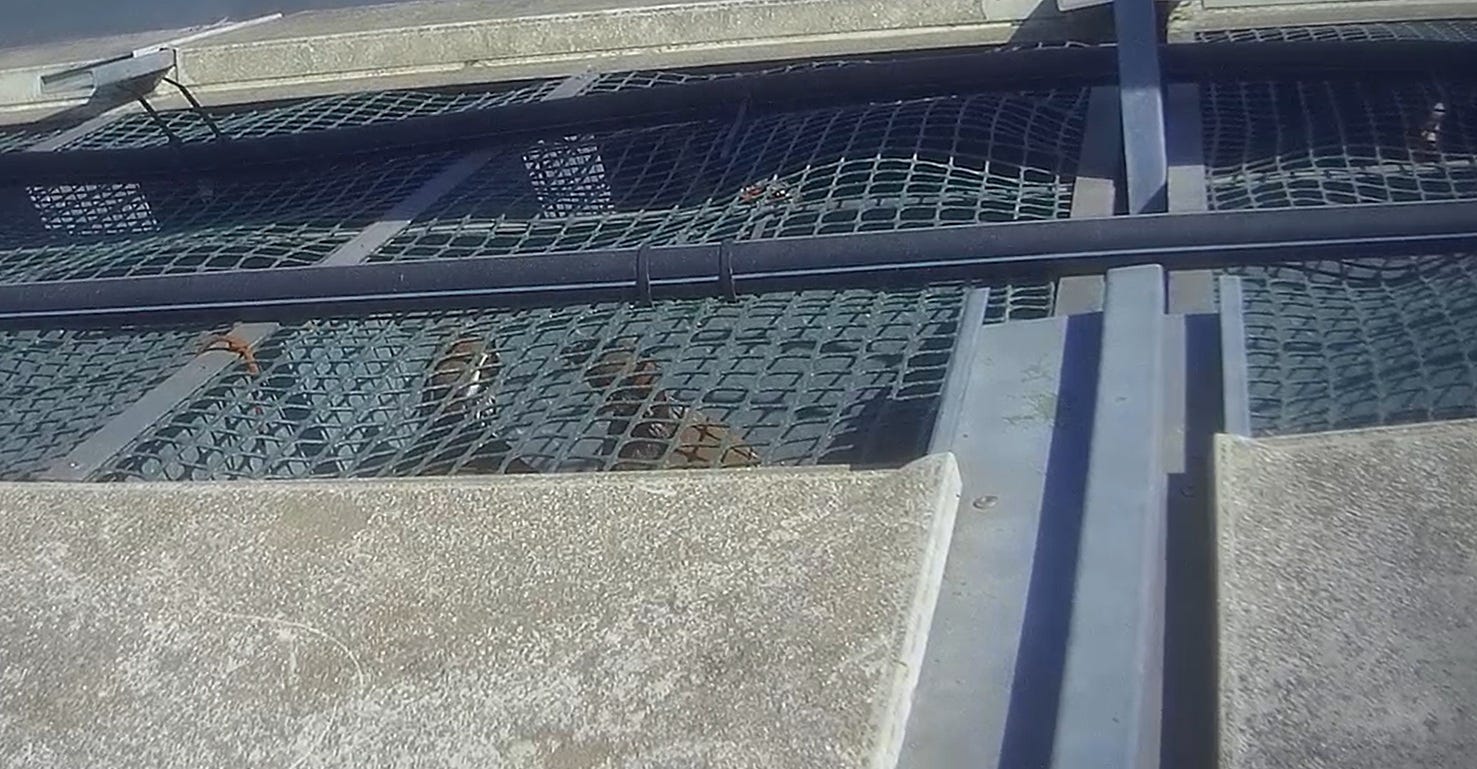
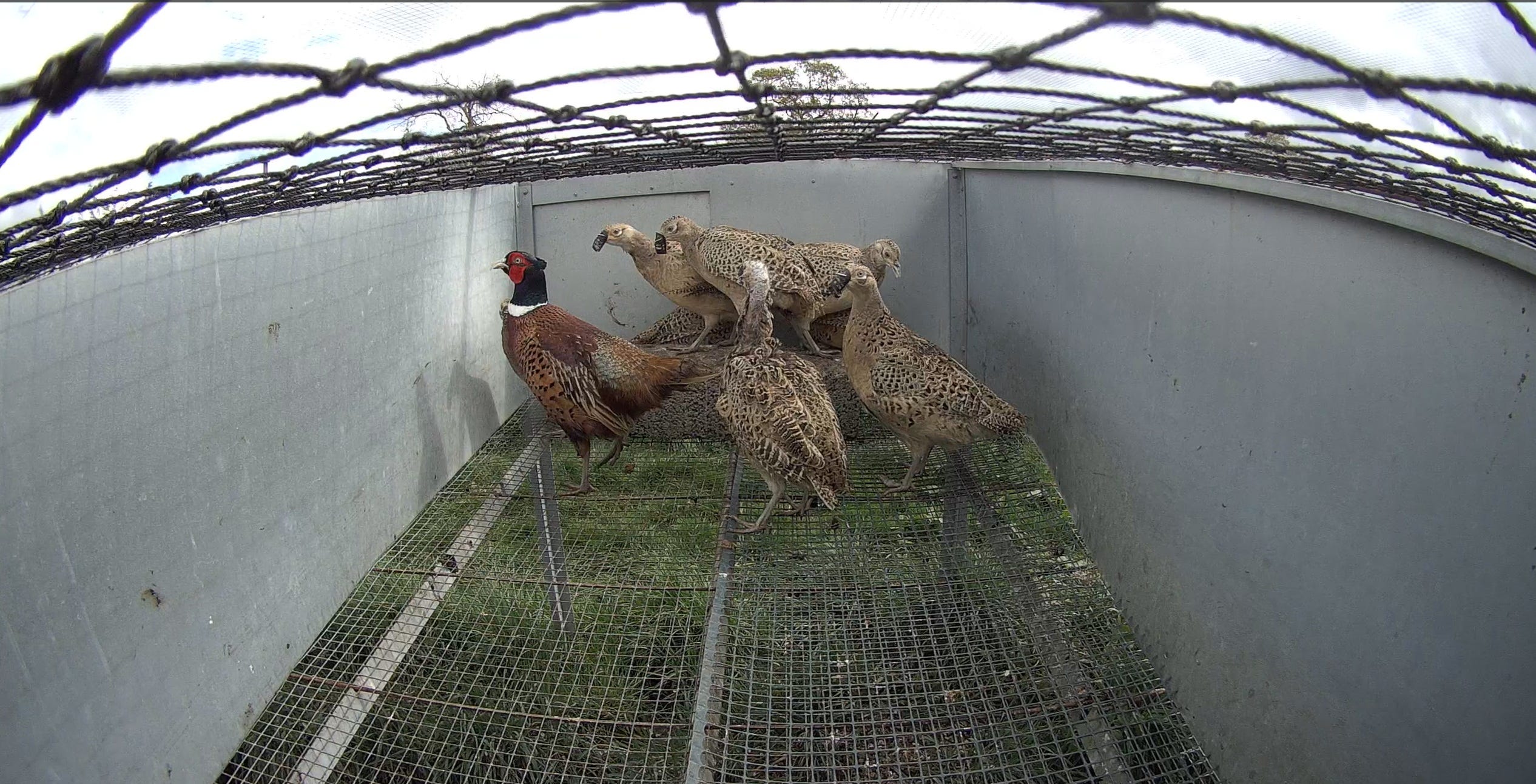
Enrichment exists as a concept precisely because we recognise that captive animals have needs that confinement does not automatically meet. It is an acknowledgement that the cage is not enough. That something more must be provided. The shooting industry has taken that acknowledgement and responded with…a block of wood.
It has taken the language of welfare and used it to defend conditions that welfare exists to challenge.
The birds in those cages cannot scratch. They cannot forage. They cannot dustbathe. They cannot be what they are.
That is not just an enrichment problem. It is a problem of the system as a whole. And no one seriously believes it is solved by pointing a camera at a bit of wood.
Video recorded by our undercover investigator at Heart of England. All of these cages were in use at the time of filming in 2025.
Screenshot from Heart of England video considered fair use.
We are working to END BIRD SHOOTING. This suffering has to stop. Please share this article. Share our socials. Follow us for updates.
End Bird Shooting
Over the coming months our campaign will look at the shooting industry at every level. We will highlight the suppliers — the farms, hatcheries, importers and breeders producing tens of millions of birds under conditions that would provoke public outcry if applied to any other animal. We will expose the providers — the estates and syndicates that take those factory-farmed birds and sell the experience of killing them as leisure. And we will look at the clients — the paying guns who are fully aware of the wildlife crime, the trapping of native predators, and the mass suffering involved, and who have decided that none of it is reason enough to stay away.
This industry survives because suppliers supply, providers provide, and clients pay. We intend to examine them all.
We are working to END BIRD SHOOTING. This suffering has to stop. Please share this article. Share our socials. Follow us for updates.
Join the movement. Become a Game Changer.
We are at the beginning of something. Months of undercover work. Hundreds of hours of footage. Farms across the UK exposed. And we are only just getting started.
But investigations alone do not end industries. People do.
We are asking you to become a Game Changer. To stand with us as we take this fight forward, week by week, piece by piece, until the public, the media and the politicians can no longer look away. The first 500 people to sign up will receive a limited edition pin badge.
This is the beginning. Be part of it.
Is there a Petition please?🙏
The shooting industry's function is to provide living targets for those that delight in killing,
the environmental damage caused by releasing millions of non native partridge into the
countryside is not
considered to be important enough to curb this repellent business.
Governments have no desire to stop this cruelty, as they do not wish to anger the influential
and wealthy land owners who profit from this vile trade.