

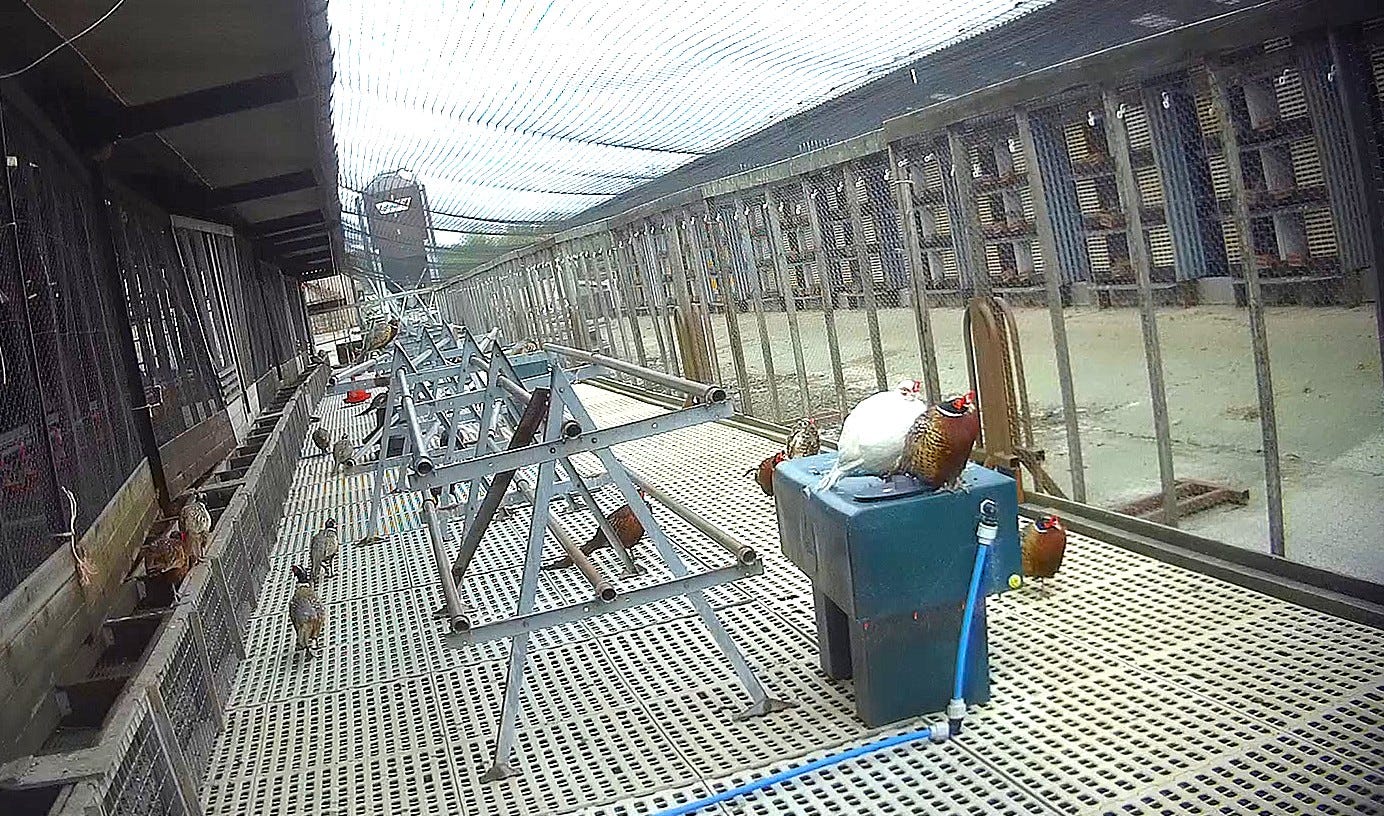
On every so-called ‘game farm’ breeding pheasants for the gun, some male birds are held in reserve. The industry calls them ‘spare cocks’. They are replacements, kept back and ready to be swapped into a cage of hens at a moment’s notice in case a breeding male dies, sickens or isn’t ‘performing’.
Our undercover investigator, who was employed on a ‘game farm’ for four weeks, frequently walked past or worked close to a pen holding some of these spare cocks. It was a large space, but they noted birds squaring up, launching at each other, chasing weaker birds into corners where there was nowhere left to run.
The regular farm workers, it seems from conversations our undercover investigator had with them, were baffled by all this aggression.
They really shouldn’t have been…
Looming straight at what they can’t have
The spare cock pen on this farm has been built - bewilderingly - in perhaps the worst position imaginable. Directly in front of it, just metres away, stands a shed of the tiered ‘colony’ cages we have written about before: row upon row of hen pheasants, stacked one above another, in full view of the males. The noise from this shed is constant and carries right across the farm.
The video clip below shows how close the cages and the pen were to each other: in the first part of the video the investigator is walking between them, in the second they are looking along the ‘spare cock’ pen. Some cocks seemed to be staring intently across the gap, focussed on the females they couldn’t reach.
In the wild, a cock pheasant’s entire spring revolves around hens. By April most wild males have staked out their own defended territories along the edges of cover, and each gathers a small harem of females that he guards from rival cocks. Males claim and hold that ground by crowing and wing-whirring, and when rivals meet, the fights can be vicious.
What our investigator recorded is very different: cocks, primed by the season to claim territory and win hens, in an enclosure with a wall of females in front of them that they can clearly see and hear but can’t reach. Every bird in that pen is a rival to every other. The trigger for their aggression isn’t a one-off. It’s there every minute of every long day, built directly into the layout of the farm.
This is not some obscure point of animal behaviour. Anyone who has kept poultry knows that males who can see females but can’t get to them become frustrated and aggressive. Specialist guidance on keeping pheasants explicitly warns against housing multiple males near each other in the breeding season. Placing a pen full of spare cocks directly in front of a shed full of hens isn’t just poor planning - it is creating the conditions for violence.
An exotic in the mix
When we studied the footage the investigator recorded, we noticed something else. Among the Common, or Ring-necked, pheasants, we identified several Reeves’s pheasants. They are beautiful birds with an extraordinarily long barred tail and black-and-white head - but an entirely different species.
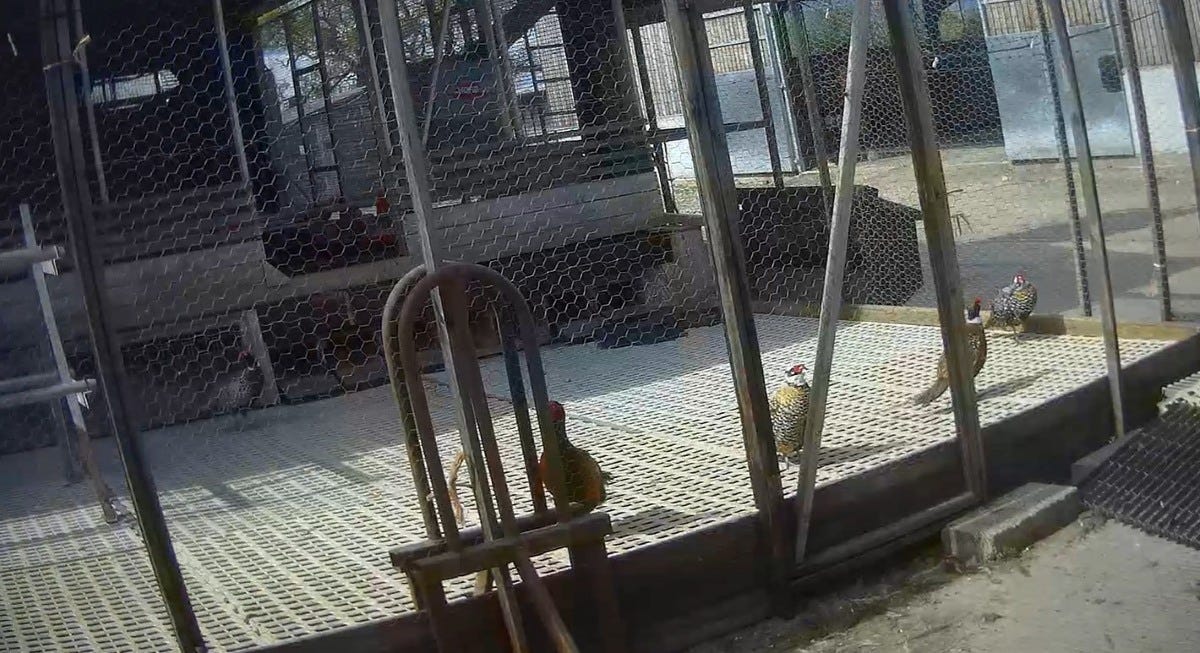
Reeves’s pheasants come from the forests of central and eastern China and were first brought to Europe in the 1830s. In their native range, the species is classed as Vulnerable on the IUCN Red List. Shoots see them as something ‘different’, an exotic extra to keep the guns interested, but they have a reputation for aggression towards people, other animals and other pheasants, especially in the breeding season. UK keeping guidance advises against mixed-species aviaries for exactly that reason. The head of education at the Game & Wildlife Conservation Trust - a pro-shooting research charity the industry itself relies on - has said the species is known for this kind of aggression and that nothing can be done to calm them down.
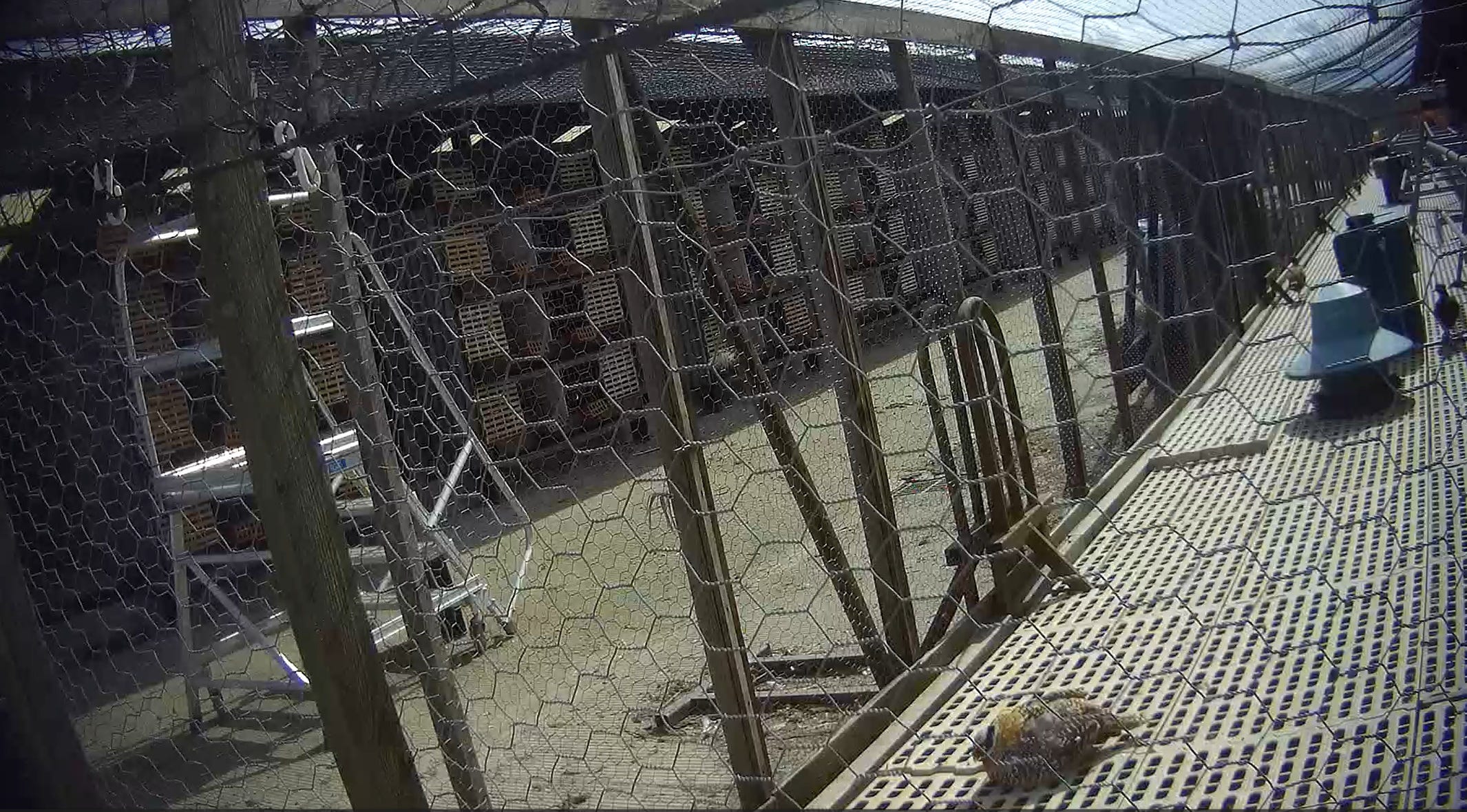
But this ‘game farm’ had still chosen to take a species famous for its aggression, mix it into a pen of frustrated males of another species, and place the whole lot directly in front of a shed of hens.
What on earth did the ‘game farm’ think - assuming the managers were thinking at all at this point - would happen?
This would never happen in the wild
Reeves’s and rival Ring-necked pheasant cocks would never be forced together in a confined space with no escape, staring day after day at females they can’t reach. Wild birds simply don’t encounter each other this way, and they are never put under the kind of relentless pressure that drives them to attack one another like this. In the wild, a cock that loses a fight can simply walk away, and many young males wait a year rather than fight for a poor territory. Strip away space, cover and the freedom to retreat, add a constant trigger, and stress turns into violence.
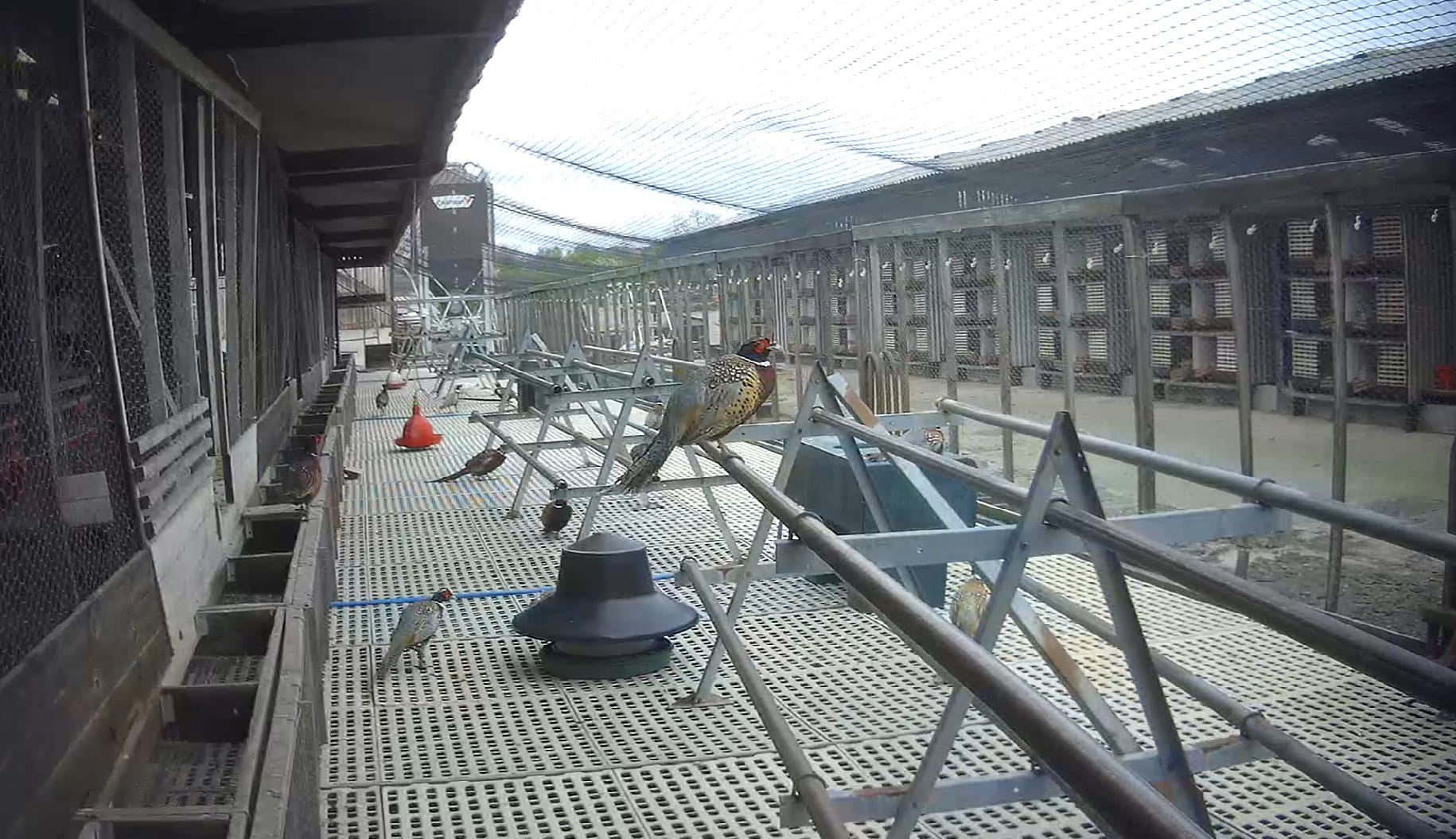
Unlike the so-called ‘experts’ who seemed puzzled that the birds in their care were aggressive, we’re not remotely surprised.
There is no mystery here. The people who work with these birds every day, and who make their living from breeding them, ought to know full well why the cocks were fighting.
But as we’ve shown throughout this series, the shooting industry is very good at not knowing. When exhausted hens die in May, ‘it just happens’. When cocks tear at each other in a pen practically designed for frustration, it’s a puzzle. It is never the fault of a system the industry itself developed to squeeze as much out of these birds as possible.
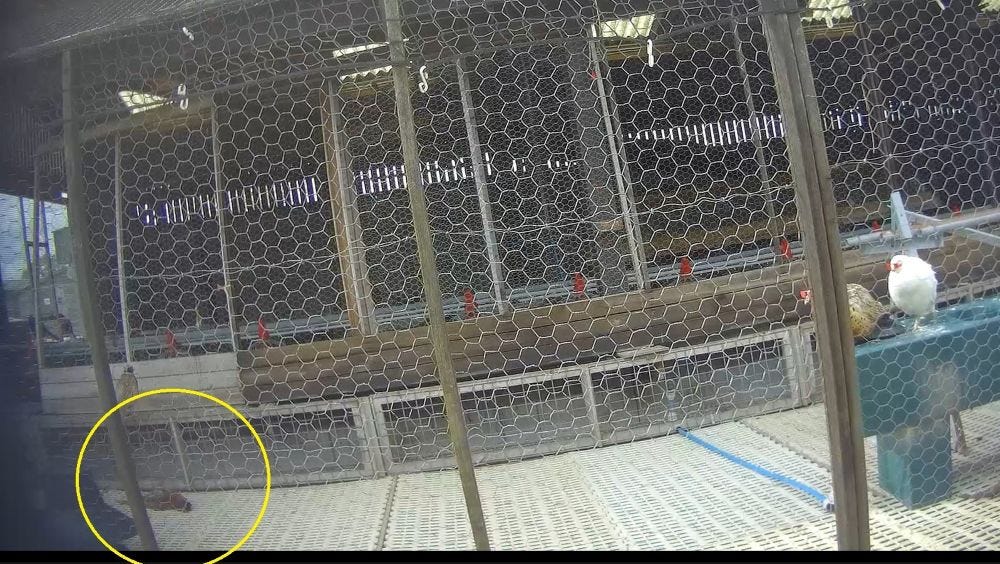
Make no mistake, what happens in this pen is not ‘just what pheasants are like’. Every attack, every injury, and every dead bird in that pen is the result of a decision the farm took to place males out of reach of females and in close contact with aggressive males of a different species.
The shooting industry makes claims about how well they treat the birds in its care, but article after article tells a very different story. And never forget why all this cruelty and suffering is taking place on ‘farms’ like these: it’s so that yet another generation of birds can be hatched, reared, released and shot for ‘sport’.
Video and images recorded by our undercover investigator in 2025.
We are working to END BIRD SHOOTING. This suffering has to stop. Please share this article. Share our socials. Follow us for updates.
Join the movement. Become a Game Changer.
We are at the beginning of something. Months of undercover work. Hundreds of hours of footage. Farms across the UK exposed. But we are only just getting started.
Many of you have already become a Game Changer, standing with us as we take this fight forward, week by week, piece by piece, until the public, the media and the politicians can no longer look away. We are extremely grateful
We are reaching a larger audience all the time, though, many of whom won’t know that Game Changers help us fund investigations, take on staff, and make us more effective. So we are going to repeat the call here - this is just the beginning, please be a part of it.